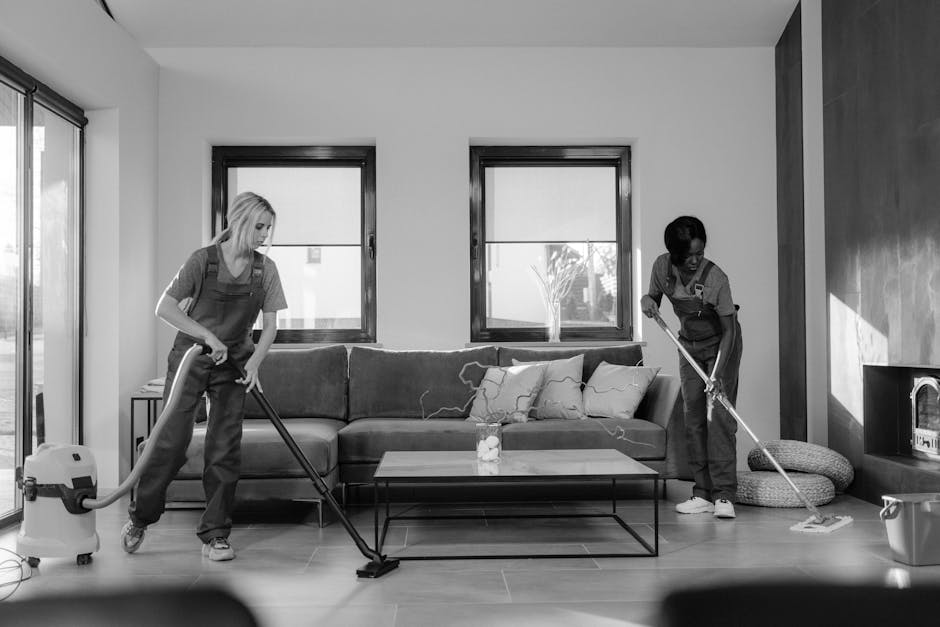
Real cost of deep cleaning in Highbury explained
If you've ever looked at a deep cleaning quote and thought, "Right, but what am I actually paying for?", you're not alone. The Real cost of deep cleaning in Highbury explained is not just a number on a page; it's a mix of property size, condition, access, service depth, and the time it takes to do the job properly. In Highbury, where homes range from compact flats to larger Victorian terraces and busy rental properties, the price can vary more than people expect.
This guide breaks it all down in plain English. You'll see what drives the cost, how a professional deep clean is usually priced, what good value looks like, and where people accidentally overspend. If you're comparing options, or just trying to work out whether deep cleaning is worth it, this should help you make a clearer decision.
One thing we hear a lot is that deep cleaning feels a bit mysterious. Fair enough. It often includes the areas people don't clean every week: behind appliances, around skirting boards, inside ovens, limescale-heavy bathrooms, stubborn build-up in kitchens, and those awkward spots that somehow attract dust like a magnet. The key is knowing what is included before you book.
Why Real cost of deep cleaning in Highbury explained Matters
There's a big difference between a standard tidy-up and a proper deep clean. A weekly clean keeps a home presentable. A deep clean resets the place. That matters if you're moving in, moving out, hosting guests, preparing a rental property, recovering after building work, or simply getting on top of build-up that regular cleaning has not shifted.
The reason cost matters is simple: if the quote is too low, corners may be cut. If it's too high, you may be paying for services you don't need. In Highbury, where time is precious and many households juggle work, family, and commuting, people usually want a practical answer, not a vague sales pitch.
Let's face it, deep cleaning is one of those services where the cheapest option is not always the cheapest in the end. If the oven still smells burnt, the bathroom grout is still patchy, or the end-of-tenancy check reveals missed details, you end up paying again. That is where the real cost shows up.
It also helps to separate base cleaning price from extra work. A quote may look fine at first glance, but add-ons such as appliance detailing, carpet treatment, or heavy limescale removal can change the total quickly. Knowing that upfront saves you a fairly annoying surprise later.
For readers comparing service options, it can help to look at the wider service picture too. If you need a broader home refresh, a good starting point is the site's deep cleaning service, and if you want to understand how a company presents its pricing approach, the pricing and quotes page is worth reviewing alongside the final estimate.
How Real cost of deep cleaning in Highbury explained Works
Deep cleaning quotes are usually built from a few core factors. Not every company prices the same way, but the logic is usually familiar.
1. Property size
A studio flat, a two-bed maisonette, and a four-bedroom family house do not take the same time. Bigger spaces mean more rooms, more surfaces, more fixtures, and more travel between tasks. Even within the same postcode, the layout can make a huge difference. A compact flat with lots of furniture can take longer than a larger but more open property. Strange but true.
2. Condition and build-up
This is the big one. A home that has been regularly maintained will cost less to deep clean than one with months of build-up, grease, soap scum, pet hair, or post-renovation dust. The dirtier the job, the more labour and specialist effort it usually needs.
3. Scope of work
Some deep cleans are kitchen and bathroom focused. Others are whole-property cleans. Some include ovens, carpet cleaning, upholstery, or window cleaning. Others do not. The scope matters more than many people realise. A broad clean that includes an oven cleaning add-on and window cleaning will naturally cost more than a basic reset of surfaces and floors.
4. Access and logistics
Parking, floor level, stair access, parking restrictions, and whether the team needs to carry equipment through narrow hallways can all affect time on site. In a busy part of London, those small logistics add up. They do not sound dramatic on paper, but they matter in the real world.
5. Specialist tasks
Some jobs need more than general cleaning methods. Think limescale removal, hard floor treatment, upholstery care, or stain-focused work. If you want a more targeted service, options such as carpet cleaning, sofa cleaning, or hard floor cleaning may be added to the plan.
A typical process starts with a quote, then a walkthrough of what's included, then the clean itself. On the day, the team should bring suitable tools, work room by room, and focus on high-touch and high-build-up areas. If a service looks rushed from the start, that's a warning sign. You can usually feel it in the details.
Key Benefits and Practical Advantages
It's easy to think of deep cleaning as a cosmetic service, but that undersells it. A proper clean can change how a home feels, how manageable it is to live in, and how confident you feel handing it over to someone else.
- Better hygiene: build-up in kitchens and bathrooms is removed more thoroughly than in a routine clean.
- Improved presentation: useful for letting, selling, inspections, or welcoming guests.
- Less stress: you do not have to spend a weekend scrubbing around appliances or on top of cupboard doors.
- Longer-lasting cleanliness: when the deep layers are tackled, your everyday upkeep becomes easier.
- Better value from related services: combining a deep clean with targeted options like upholstery cleaning or rug cleaning can make a home feel fully refreshed rather than only half-done.
There's also a psychological benefit that people underestimate. When your home is clean at the edges, it somehow becomes easier to keep tidy. You notice the dust less. The kitchen feels calmer. Even the air can feel lighter after a proper reset. That sounds a bit poetic, but you'll know exactly what I mean if you've walked into a freshly cleaned room on a grey Highbury morning.
If you manage a rental property or run an office, the value is even clearer. For landlords, regular deep cleaning supports better handovers. For businesses, a scheduled service through office cleaning or office cleaners can help maintain a more professional environment without the stop-start patchiness of ad hoc cleaning.
Who This Is For and When It Makes Sense
Deep cleaning is not just for people who have let things slide. Quite the opposite, really. Some of the most sensible bookings come from organised people who simply know when a full reset will save time, effort, or money.
You might need it if:
- you are moving into a new place and want a fresh start;
- you are moving out and need the property brought up to a strong standard;
- you have tenants leaving and want the home ready for re-marketing;
- you are preparing for family staying over, especially if the place has not been fully cleaned in a while;
- you have had builders, decorators, or repairs in the property;
- you want to deal with kitchen grease, bathroom residue, or hidden dust that ordinary cleaning misses;
- you simply feel the home has lost that clean, comfortable feeling.
For renters, deep cleaning often overlaps with end of tenancy cleaning. For homeowners, it often sits somewhere between a spring clean and a one-off overhaul. For businesses, the logic is similar but the priorities shift toward presentation, hygiene, and disruption control. A good cleaning company should be able to explain the difference clearly rather than blur everything together.
And if you're not sure whether you need a one-off service or something more routine, ask yourself one question: do you need a reset, or just maintenance? That one question saves a lot of confusion.
Step-by-Step Guidance
If you want to understand the true cost, the best approach is to break the job into stages. That makes the quote easier to judge and the result easier to measure.
- Inspect the property honestly. Walk through each room and note what actually needs attention. Be specific: oven, extractor fan, skirting boards, inside cupboards, limescale, windows, floors, sofa, rugs.
- Separate essentials from nice-to-haves. A full-property deep clean may not need every add-on. Decide what matters most first.
- Ask what the quote includes. Does it cover labour only, materials, specialist products, appliance interiors, or waste removal?
- Check time expectations. A quote that seems unrealistically fast often is. Good cleaning takes time. No magic wand involved.
- Confirm access details. Parking, keys, entry times, lift access, pet concerns, and alarm systems should all be discussed in advance.
- Prepare the space a little. You do not need to empty the house, but reducing clutter helps cleaners reach the areas that matter.
- Review the result room by room. Look at corners, handles, fixtures, and hidden surfaces, not just the obvious centre of the room.
A quick example: if your kitchen needs heavy work and your lounge just needs a general deep clean, you may be better off asking for a tailored package instead of a blanket whole-home quote. That can be more efficient and sometimes more affordable too.
Expert Tips for Better Results
Here's the part that makes a real difference. A deep clean is only as good as the brief you give. The clearer the brief, the fewer awkward surprises.
- Be honest about dirt levels. If there is grease above cabinets or mould staining around seals, say so. It helps the team bring the right products and enough time.
- Prioritise high-use rooms. Kitchens, bathrooms, hallways, and living rooms often deliver the biggest visual improvement.
- Bundle related tasks carefully. If you're already paying for one visit, adding one-off cleaning tasks can be worthwhile if they are genuinely needed.
- Ask about materials. Some surfaces need gentle treatment. Others can handle stronger methods. A good cleaner should know the difference.
- Check whether specialist services are separate. Carpet, upholstery, oven, and window work are often priced differently.
Also, do not be afraid to ask boring questions. Seriously. What chemicals are used? Is the team insured? What happens if something is missed? A professional company will not mind. In fact, the better ones welcome it.
If your property has mixed surfaces, it can help to combine general cleaning with specialist support such as domestic cleaning or targeted care for floors and fabrics. That gives you a more balanced finish instead of a quick surface shine and a grubby edge. Nobody wants that odd half-clean look.
Common Mistakes to Avoid
The most expensive deep clean is often the one booked badly. Here are the mistakes that catch people out again and again.
- Choosing purely on price. A low quote may omit important work or use a too-short time allocation.
- Not reading the scope. If the quote says kitchen surfaces but not inside appliances, don't assume otherwise.
- Forgetting specialist add-ons. Ovens, carpets, sofas, and hard floors often need separate attention.
- Underestimating build-up. Heavy grease or long-neglected bathrooms can take far more labour than expected.
- Leaving clutter everywhere. A cleaner cannot clean under every object if the room is packed.
- Not asking about re-cleans or complaints. Clear terms matter when something is missed.
Another common one: people compare a routine house clean with a proper deep clean and assume they should cost roughly the same. They shouldn't. Different depth, different labour, different result. Apples and oranges, basically.
Tools, Resources and Recommendations
To estimate value properly, you do not need spreadsheets and a calculator with six decimal places. You just need a decent checklist and a realistic view of what the property needs.
Useful things to consider before you request a quote:
- room count and approximate size;
- condition of bathrooms and kitchen;
- any pets, smokers, or heavy traffic areas;
- whether appliances need detailing;
- if carpets, rugs, sofas, or mattresses need work;
- whether windows, frames, or hard floors need specialist treatment;
- timing constraints, such as move-in or move-out deadlines.
If you are comparing providers, the most helpful internal pages are the ones that explain what the business actually offers and how it handles trust signals. Start with the main about us page, then review insurance and safety and the company's health and safety policy. That tells you a lot about professionalism before anyone even arrives.
For practical payment reassurance, it is also sensible to check the payment and security page. And if sustainability matters to you, the recycling and sustainability information can help you understand how waste and materials are handled. Small detail, maybe, but it matters to some customers more than they admit.
Law, Compliance, Standards, or Best Practice
Deep cleaning is not a heavily regulated service in the way medical or financial services are, but there are still important standards and expectations. Good providers should act in line with general UK consumer protection principles, treat property with care, and operate with suitable insurance and safe working practices.
Best practice usually includes:
- clear scope and pricing before work starts;
- appropriate insurance for accidental damage or liability issues;
- safe use of cleaning products and equipment;
- respect for access arrangements and property security;
- proper handling of complaints or missed items;
- transparent terms and conditions.
If you're booking for a rental handover, it is also wise to understand what your tenancy agreement expects. End-of-tenancy expectations can vary, and while a deep clean is usually a strong foundation, it is not a substitute for reading your own agreement carefully. That bit gets skipped more than it should.
For general trust checks, the site's terms and conditions and complaints procedure are worth reading. Good businesses are usually straightforward about both. If they are not, that tells you something too.
Options, Methods, or Comparison Table
Here's a simple way to compare the most common deep cleaning choices. Exact pricing will vary, but the structure below helps you judge value rather than just looking at the headline figure.
| Option | Best for | Typical scope | Cost drivers | Value note |
|---|---|---|---|---|
| Basic deep clean | Homes that need a reset | Rooms, surfaces, bathrooms, kitchen | Size, condition, access | Good starting point if the property is generally tidy |
| Deep clean plus oven | Kitchens with heavy use | Full clean plus appliance detailing | Grease level, oven size, extractor work | Often worth adding because the kitchen is where build-up shows fastest |
| Deep clean plus carpet or upholstery care | Family homes, rentals, pet owners | General clean plus fabric treatment | Number of rooms, stain level, fabric type | Best when the property feels clean but still looks tired |
| Post-build or post-renovation clean | Homes after works | Dust removal, residue cleaning, surface detail | Dust volume, access, time needed | Usually more labour-heavy than people expect |
| Office deep clean | Workspaces and shared areas | Desks, floors, kitchens, washrooms, touch points | Headcount, layout, frequency | Best arranged around operating hours to reduce disruption |
If you are deciding between a broad home clean and a more tailored package, the right answer is usually the one that solves the actual problem in front of you. Not the fanciest one. Not the cheapest one. The useful one.
Case Study or Real-World Example
Picture a typical Highbury flat after a long tenancy. The living room looks fine at first glance. But then you notice the kitchen extractor has grease build-up, the bathroom has limescale around taps, the skirting boards are dusty, and the inside of the oven has that baked-on patch that no amount of wishful thinking is going to fix.
Now compare that to a lighter job in a newer home where regular weekly cleaning has been kept up. Same postcode, different reality. The first property needs more labour and more specialist attention. The second may need fewer hours, but still benefits from detailed cleaning in the places people forget.
In a case like the first one, a quote should reflect the deeper condition of the home, not just its floorplan. If the provider does not ask about the oven, carpets, or the condition of bathrooms, that is a clue that the quote may be too rough to trust. A good cleaner will want to know the story behind the property, not just the square footage. Sounds obvious, but it is often missed.
For a property like this, combining house cleaning, targeted carpet cleaner support, and detailed kitchen work can make the overall result more complete. Not always necessary, but often sensible.
Practical Checklist
Use this checklist before you book, or before a cleaner arrives.
- Have I listed every room that needs attention?
- Do I know whether the quote includes bathrooms, kitchen appliances, and interior detail?
- Have I checked if carpets, rugs, sofas, or windows are separate?
- Do I know what access the team will need?
- Have I mentioned pets, parking, or any security concerns?
- Do I understand whether the job is a one-off, a deep clean, or a move-out clean?
- Have I read the company's terms, insurance, and complaints information?
- Am I comparing like with like when I look at prices?
- Is there anything fragile or valuable that should be highlighted in advance?
- Have I set a realistic expectation for what can be done in one visit?
Expert summary: the real cost of deep cleaning in Highbury is rarely about the headline figure alone. It is about scope, condition, access, and whether the quote actually matches the level of work needed. If those four things are clear, the decision gets much easier.
Conclusion
The real cost of deep cleaning in Highbury is best understood as value per result, not just pounds per hour. A fair quote should reflect the property's size, how much work is needed, what is included, and whether the job needs specialist attention. If you compare services carefully, ask direct questions, and check exactly what is covered, you are far more likely to get a clean that feels genuinely worth the money.
Truth be told, a good deep clean is one of those expenses that can quietly improve everyday life. The room feels calmer. The kitchen feels easier. The whole place just behaves better. And when you live or work in a busy part of London, that kind of reset can be very welcome.
If you are still comparing options, review the service detail, make a shortlist, and ask for a tailored quote rather than guessing from a generic price. That small bit of care usually pays off.
Get a free quote today and see how much you can save.
Sometimes the best feeling is not a perfectly spotless home. It's the relief of knowing it's been properly taken care of.
Frequently Asked Questions
How much does deep cleaning usually cost in Highbury?
There is no fixed figure because the cost depends on property size, condition, and what is included. A compact, well-kept flat will usually cost less than a larger home with heavy build-up or extra tasks like oven or carpet cleaning.
What is normally included in a deep clean?
A deep clean usually covers detailed cleaning of kitchens, bathrooms, floors, surfaces, skirting boards, fixtures, and other overlooked areas. Exact inclusions vary, so it is always worth checking the scope before booking.
Why do quotes vary so much between companies?
Some companies include more labour, more detail, or more equipment than others. A lower price can mean a narrower scope, while a higher price may reflect more thorough work, better products, or extra specialist tasks.
Is deep cleaning worth the money for a small flat?
Yes, if the property needs a proper reset, especially before moving in or after moving out. Even a smaller space can take significant time if the kitchen and bathroom need detailed attention.
How long does a deep clean take?
It depends on the size and condition of the property. A tidy one-bed flat may take far less time than a busy family home or a post-renovation property. The condition of the rooms matters as much as the room count.
Do I need to be home during the clean?
Not always, but many people prefer to be there at the start or end. If you are not at home, make sure access, security, and instructions are agreed in advance.
Are oven, carpet, and upholstery cleaning included?
Not always. These are often treated as separate specialist services. If you need them, ask specifically about oven cleaning, carpet cleaning, or upholstery cleaning so the quote reflects the full job.
What should I ask before booking?
Ask what the price includes, how long the job should take, whether materials are included, and how any missed areas are handled. If it is an end-of-tenancy job, ask whether the clean is suitable for handover requirements.
Is a deep clean the same as a one-off clean?
They can overlap, but they are not always identical. A one-off clean is often broader and more flexible, while a deep clean usually focuses on detailed, intensive work in neglected or high-build-up areas.
How can I tell if a quote is good value?
Good value usually means the quote is clear, the scope is well defined, and the provider explains what happens if the property needs extra time. If a price feels too good to be true, it often is. A proper comparison is always better than a rushed decision.
What if I need cleaning after building work?
Post-renovation or post-build jobs often need a more specialised approach because fine dust gets everywhere. In that case, after builders cleaning is usually more suitable than a standard tidy-up.
How do I choose a trustworthy cleaning company?
Look for clear pricing, proper policies, insurance information, and a sensible complaints process. A trustworthy provider should be open about what they do, how they work, and what is not included. Simple, really, but that openness makes all the difference.